Friday, April 15, 2011

CFC-GK Quezon City – Visita Iglesia 2011: A spiritual journey across Rizal, Laguna and Quezon provinces (Part 2)

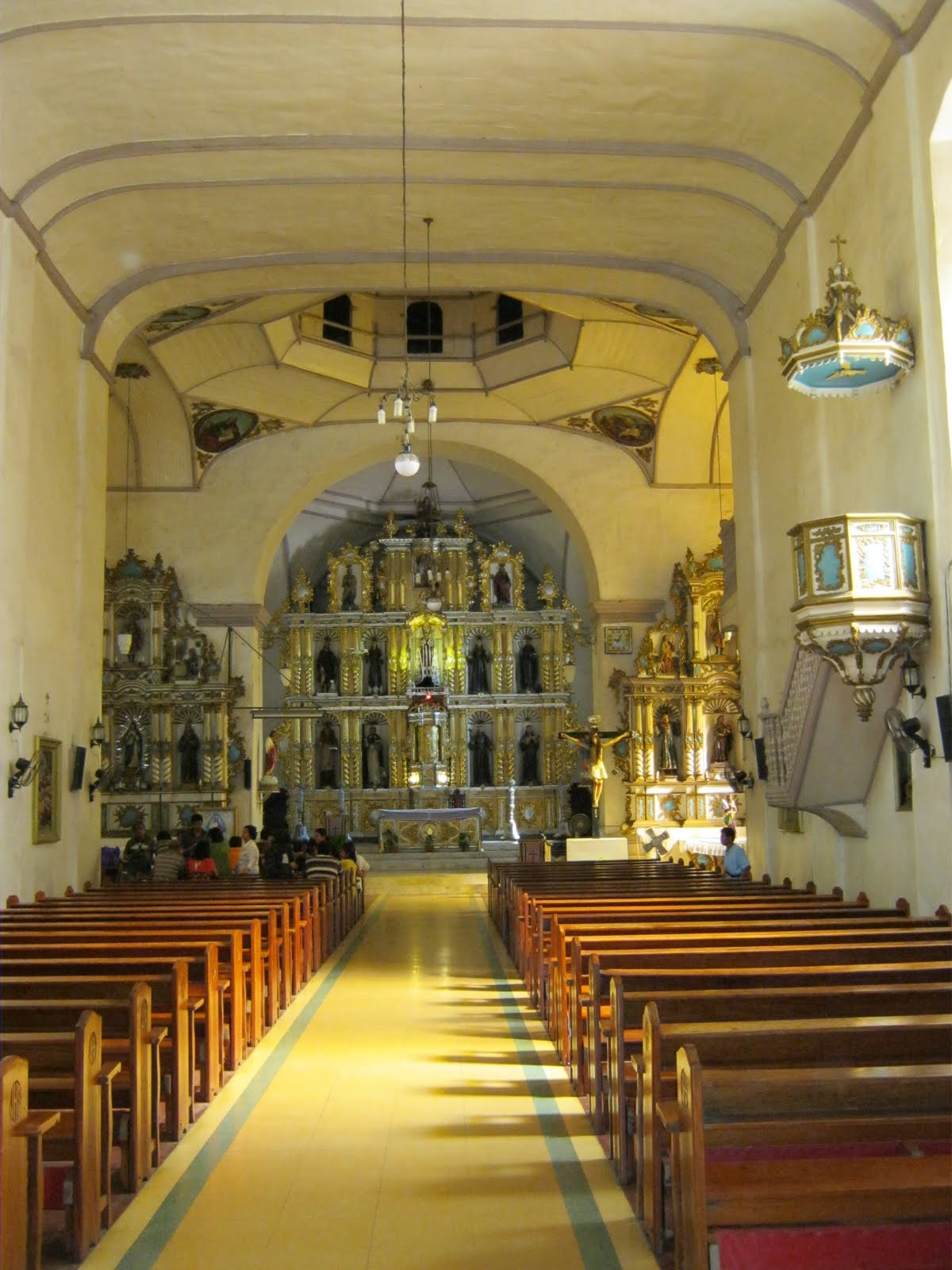
Diocesan Shrine of Our Lady of Turumba, Parish of St. Peter of Alcantara in Pakil, Laguna


The second main leg of this spiritual journey brought us to the Diocesan Shrine of our Lady of Turumba in Pakil, Laguna.

Under the Diocese of San Pablo, Laguna, this church was declared a diocesan shrine in honor of the Lady of Turumba on October 19, 2006 in commemoration of the 330th founding anniversary of the San Pedro de Alcantara parish.


Statue in honor of Pakil’s native son: Marcelo Adonay acclaimed as a prince of church music in the country


The church’s centuries-old front door


The group prayer continues


Side altar


Main altar and church dome


The La Pieta, the Evangelists and artwork on biblical stories are seen at the church dome


Stigmata
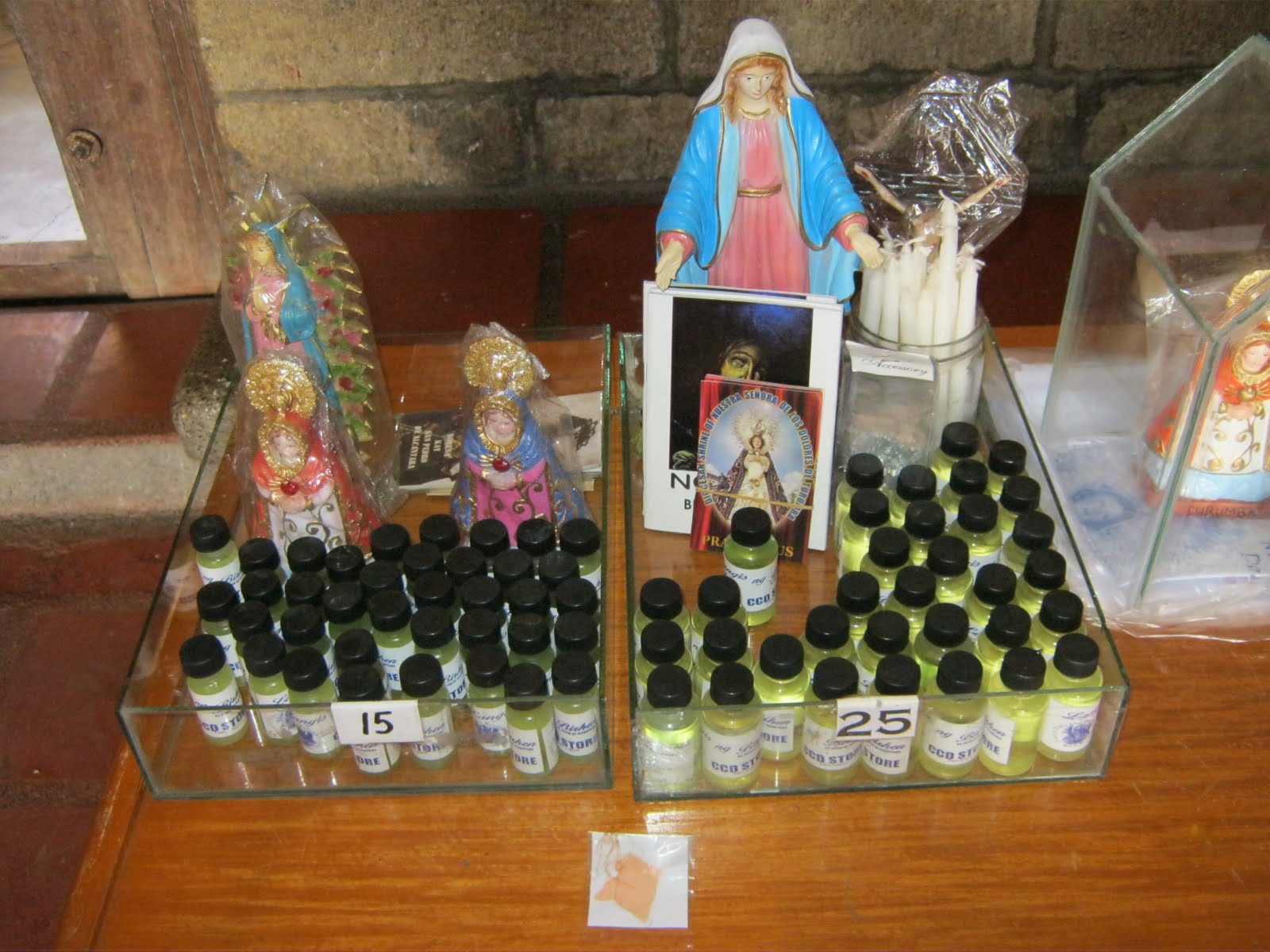


Holy oils and other religious items are made available at the church


Stairway leading to the second floor chapel


The view of the town plaza from the church upper floor


Garments of the Lady of Sorrows


View from the church balcony


The Turumba chapel


Next stop – Liliw, Laguna.

Nestled at the northwest slopes of Mount Banahaw, the natural boundary of Tayabas (now Quezon) and Laguna, Liliw stands beside the banks of a river with the same name, bounded by the towns of Nagcarlan, Majayjay and Magdalena.

According to folklore, the town of Liliw got its name from a singing bird that perched on a bamboo pole raised by Gat Tayaw, the town’s legendary founder.

However, during the Spanish and American colonial periods, Liliw was actually known as “Lilio” because the Spaniards and the Americans had difficulty in pronouncing the letter “w”. It was only in 1965 that the name “Liliw” was formally adopted by the Municipality.


An avenue of saints in front of the St. John the Baptist Parish Church in Liliw, Laguna


As a settlement during the Spanish colonial period, Liliw residents were evangelized in 1578 by Franciscan missionaries Juan de Placensia and Diego de Oropesa. The town remained a dependency of Nagcarlan until 1605 when it was assigned its first permanent minister, Fray Miguel de San Lucas.

Under the patronage of St. John the Baptist, the Liliw parish and town celebrates its feast day on August 29, a date marking the martyrdom of Christ’s humble cousin and precursor.


Picture of the Liliw Church and town of old


The group prayer continues


The Church’s three restored retablo altars


The church structure as well as the parochial rectory is primarily made up of adobe blocks and clay bricks. In 2007, then parish priest Rev. Fr. Philip B. Atienza, inspired by an old document that described the original church design, started a massive restoration that led to the reconstruction of three retablo altars, a confessional and a hanging pulpit.


Capilla de San Buenaventura


An old image of Saint Bonaventure, well known Franciscan theologian, Cardinal-Bishop of Albano and Doctor of the Church is displayed for veneration in a small newly built chapel adjacent to the atrium of the church and rectory. In 1664, the image is said to have been witnessed by the parish priest and 120 persons to have wept and sweated blood.


Side trip along Liliw’s commercial district


From the church, the group decided to have lunch there at Liliw. That of course gave everyone the chance to see the bustling commerce and trade that put this town on the map.

Aside from being a popular destination for its cold mountain water resorts, Liliw is also known as the “Tsinelas (footwear) Capital of the Philippines rivaling Marikina City of metropolitan Manila. There are numerous footwear shops along the main streets of Liliw where one can bargain hunt and haggle for a good price.

Similarly well known are Liliw’s lambanog (coconut sap alcoholic beverage), Uraro biscuits and various leather and fiber products.


OTOP – One Town, One Product concept


Liliw and Footwear synonymous to each other!


Not familiar with the local eateries, my family decided to eat lunch at the small local Chowking outlet. Being a Friday in Lent, I tried to remain true to my promise to abstain from eating meat today. I ate only pancit canton if I recall. Of course, my abstinence didn’t prohibit me from buying some delicious native white cheese and some Pako (vegetable for salads) to bring home.


Local vendor sells Pako


Mt. Banahaw and Mt. Cristobal provide a magnificent background to the figure of the Blessed Mother


Waiting for the rest to come back from lunch gave me a lot of time to appreciate the beauty of Laguna’s natural surroundings. Taking cue from Bro. Terence’s magnificent shots of the Blessed Virgin statue beside the Liliw church, I took some of my own with the two great mountains of Banahaw and Sto. Cristobal as the stunning background.


Mama Mary beside the church tower


Next stop – Nagcarlan

As a young boy, I had many good memories of Nagcarlan. During my elementary years in St. Mary’s College, this area was often a destination for school field trips and Cub Scout camping activities. In this town, we continued our spiritual pilgrimage with a visit to the church of St. Bartholomew.


St. Bartholomew Parish in Nagcarlan, Laguna


Identical in design to many nearby churches also ran by the Franciscan order (OFM), the first church of St. Batholomew was built in 1583. A second church made of brick and stone was constructed in 1752 but was partially damaged by a fire in 1781. In 1845, a choir loft was added to the reconstructed church by Reverend Father Vicente Velloc. Fray Velloc incidentally was also the cleric who had the historically famous Nagcarlan(g) Cemetery and its underground crypt built that same year.


St. Bartholomew’s altar


Statues of the Immaculate Mary with Sta. Catalina of Sena and Sta. Ana


In this station we remember as Jesus was nailed on the cross


A relief painting depicting the purification of souls in purgatory before entering God’s heavenly kingdom


From Nagcarlan, we retraced our travel route passing by the town of Liliw to go to the Municipality of Majayjay. Our travel destination - the remarkable parish church of St. Gregory the Great.


St. Gregory the Great Parish in Majayjay, Laguna


Designated a national treasure by virtue of Museum Declaration No. 2, dated July 31, 2001, the parish church of San Gregorio Magno commands a clear view of the hilly town and the Laguna de Bay from a distance. Despite some alterations on the walls, the church interior’s retablos and azulejo-tiled floor have been well preserved. I didn’t get to see it but access to the bell tower has supposedly been made easier with cement steps. This access way is also said to lead to the so-called ‘langit-langitan’, a catwalk above the ceiling which in turn proceeds to the crossing over the transept.

Originally built by the Augustinian friars out of bamboo and nipa material at Sitio May-it after the conquistador Salcedo pacified the natives in 1571, the first parish church was burned in 1576. It was reconstructed by the Franciscans in 1578 but caught fire a second time around in 1606. The present stone church was put up from 1616 – 1649; partly burned again in 1660 and repaired in 1707. It then underwent expansion and several repairs over the next two centuries due to damages from passing storms. The American colonialists used the church as a base during the Philippine-American War, again undergoing repairs in 1912.


Plant covered buttresses support the church walls


St. Gregory’s bell tower


A statue of the Laguna’s greatest son Jose Rizal nearby
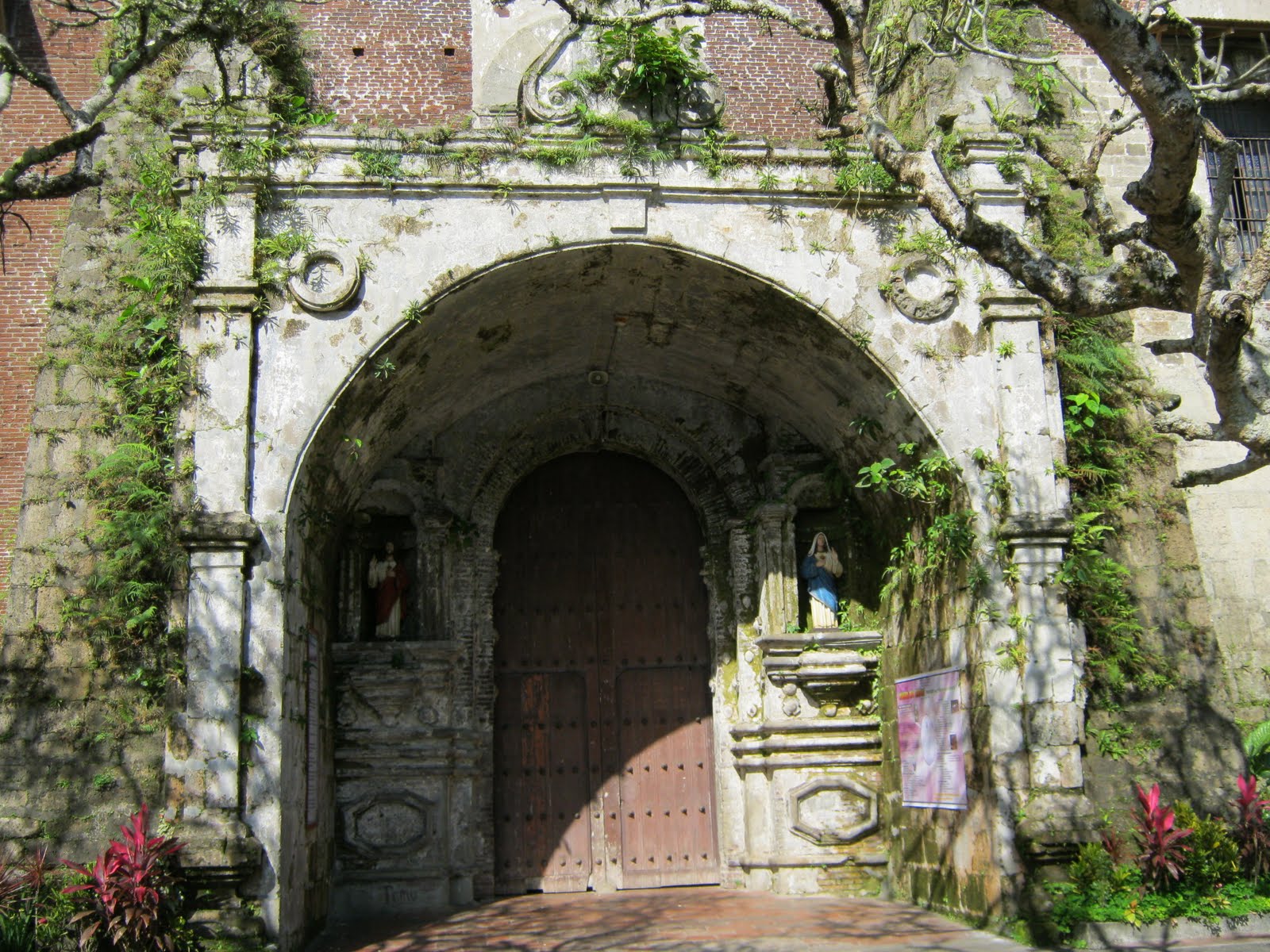


Side entrance


The final Stations of the Cross are reflected over inside St. Gregory’s


The church altar and chancel


Our Visita Iglesia has already brought us to a lot of places but the journey is far from over.

Onwards to Lucban!


CFC-GK Quezon City – Visita Iglesia 2011: A spiritual journey across Rizal, Laguna and Quezon provinces (Part 1)

The spiritual journey starts here: Along Commonwealth Ave in Quezon City


Our CFC-GK household had been planning for an appropriate group activity this season of Lent for quite sometime. Quite possibly, there might be no better collective action in this regard than to hold a Visita Iglesia, a spiritual pilgrimage across the provinces to pray the Way of the Cross and reflect on the life, passion, death and resurrection of the Lord Jesus Christ.

So we did embark on such a spiritual journey last April 8 with many of our family members which included my mother in law and a niece from Davao City here in Manila on vacation.

Our group converged near the St. Peter’s Church along Commonwealth Ave. that Friday morning.

From Quezon City, we had a brief stopover at Marikina where our household leader, Bro. Steve Krueger led the group in prayer, after which he gave an orientation regarding our intended travel program. Choosing the Rizal (via Antipolo) to Laguna, our travel route promised to be a long, winding but scenic one.


Bro. Steve Krueger leads the group in prayer


Everyone is briefed about the itinerary and tasking by couple


We encountered significant delay early on as our hired driver wasn’t familiar with the streets of Marikina. Our run around the roads of Marikina trying to catch up with the rest of the convoy cost the group significant travel time. Time constrained, it compelled the group to forego the intended trip to St. Joseph Parish in Baras, Rizal to avoid traffic opting to proceed to the town of Tanay.


First stop: San Ildefenso de Toledo Parish in Tanay, Rizal


The history of Tanay could be traced to a small town on Monte Tan-ay, also called Inalsan. The ecclesiastical administration of the area was under Pililla from 1573 until 1606 when the first church was built and the parish of San Ildefonso was established. Later the town was moved to San Antonio in 1620 but was eventually transferred to its current site in 1783.

While the first stone church in Tanay was finished in 1680, the present church was finished within a ten year period from 1773 to 1783.

Politically, with the establishment of civil government under the Americans in 1901, Tanay became a part of the province of Rizal.

Presently under the diocese of Antipolo, the parish celebrated its 400th foundation anniversary last November 12, 2006.


Otherwise known as the Church of Tanay, the parish was founded way back in 1606


The baptism of the Lord Jesus accentuates the important function of the church baptistery


The church interior


Bro. Terence and Sis. Thelma Grana leads the group in praying the Way of the Cross


Old church altars are often filled with statues of the saints


Family picture (Sonny Boy wasn’t with us) with Mama Charing (my mother in law and Julia (niece in law)


“Tanay is an open book”


Bestowed by unknown planters, two acacia trees (Samanea saman) on the church’s patio for more than a century have been silent observers to the religious piousness of Tanayans


Pilgrims pose for a group picture


Grand women of CFC-GK


From Tanay, Rizal our group traveled through the Municipality of Pililia and crossing over to the Province of Laguna into the Municipality of Sta. Maria.


Nuestra Seňora de los Angeles Parish in Sta. Maria, Laguna


The parish church of Sta. Maria has visibly gone through a lot of physical changes through the centuries.

According to the National Historical Committee, the town of Santa Maria de Caboan was founded in 1602 but was called San Miguel until 1613. The first parish minister was Reverend Antonio de La Llave. A church built in 1613 was destroyed by the Chinese during an uprising in 1639. Another church built by 1669 later succumbed to earthquakes in 1880. The Reverend Leopoldo Arellano reconstructed the church in 1891 but was again destroyed by another earthquake on August 20, 1937.


Church’s imposing bell tower


The Way of the Cross is continued


At some point there was some confusion regarding the Stations of the Cross which stemmed from the substantial changes to the biblical events depicted in the stations of the new version of the Way of the Cross.

Both the Traditional and the New Way of the Cross have fourteen (14) Stations. However, the newer version presumably in an attempt to include other significant events in the life of Christ opted to merge the three stations regarding the Lord’s fall under the weight of the cross into one station, replacing the station where Mother Mary meets with Jesus on the way to Calvary with a much more heart piercing encounter at the foot of the Cross, and removing the other scenes such as Veronica wiping the face of Jesus and Christ being taken down from the cross. These changes now provided for the inclusion of stations that highlighted the institution of the Holy Eucharist, the Lord’s agony in the garden, His scourging and being crowned with thorns, Jesus’ promise of heaven to the repentant thief, and the most important event in all of history, Christ’s glorious Resurrection.


Modern church architecture is somewhat minimalist in design


Three mothers converge


Antique church bells are displayed


Outside by the side yard were three antique church bells. Locals believe that these bells were around 400 years old. I’m not so sure all the three were that old as there were no clear visible markings to indicate their dates of origin. But since the parish has been around for nearly 400 years, there might be enough truth to substantiate these claims.


A visit to the Kusina ni Ka Rany


Home to the blood relatives of Sis. Baby Krueger, our itinerary included a visit to their ancestral home by the town plaza. The first floor of the historic house has been transformed into an eatery. Our arrival was met with the warm hospitality of Sis. Baby’s brother, Ka Rany who served us with delicious merienda. We were all simply much obliged!


A sumptuous native food merienda


If you are into comfort food, you know how enjoyable it is to eat tasty lugaw (congee) along with all the condiments, hard boiled eggs and lumpiang ubod (spring rolls). There was ice cold Coke (regular and zero for diabetics like me!) to wash all these delicious food down!


A blast from the past: Sis. Baby Krueger as a young contestant in a beauty pageant


The spiritual journey also provided for fellowship and gastronomic nourishment


This poster on the forthcoming fiesta of Our Lady of (Sorrows) Turumba gives a hint to our next destination


With our physical bodies nourished and refreshed, we continued on to the next leg of our Lenten spiritual voyage…